




The first copper bracelet I held from a Tibetan workshop was heavier than I expected. The artisan who made it explained why. Copper, she said, carries sound and prayer in a way lighter metals do not. The mantra engraved on the face would turn with each movement of the wrist. The piece was not decoration. It was an instrument, worn against the pulse.
That conversation sits behind everything in this guide. The tibetan copper bracelet has become a global accessory, but it began as a sacred object, made in Himalayan workshops and blessed in monasteries. Below: what the metal means in Tibetan tradition, what it is believed to do for the body and the mind, how to wear one correctly, and how to recognize a piece made with the integrity the tradition deserves.
What a Tibetan Copper Bracelet Actually Is
A tibetan copper bracelet is a handcrafted wrist piece made primarily from copper and worn as part of Tibetan Buddhist devotional practice. Most authentic examples include one or more of the following: a hand-engraved mantra (usually Om Mani Padme Hum), DZI etched agate beads, silver or brass inlay, or a knotted cord adjustable to the wrist. The construction is consistent across the tradition: solid metal, often slightly rough at the edges, finished by hand rather than by machine.
Three things distinguish a Tibetan copper bracelet from a generic copper cuff sold on a fashion site. The first is the mantra. The most common engraving is the six-syllable mantra of Avalokiteshvara, the bodhisattva of compassion, written in Tibetan script. The second is the construction method. Authentic pieces are soldered, hammered, and engraved by hand. The third is the provenance: the bracelet was made by an artisan working within a living tradition, not stamped out of a factory mold.
In practice, most pieces that carry the name "Tibetan copper bracelet" today come from workshops in Nepal, Tibet, Bhutan, and the northern Indian hill stations. The material itself — pure copper — is the same wherever it is sourced. What varies is the craftsmanship, the mantra work, and the care taken during finishing.
Why Copper Holds a Sacred Place in Tibetan Buddhism
In the Tibetan Buddhist understanding of materials, every metal carries a different spiritual quality. Gold is associated with the Buddha and the highest attainments. Silver is lunar, receptive, feminine. Copper sits between them — warm, conductive, and earthy. It is the metal of the bodhisattvas, the enlightened beings who remain in the world to serve others.
Copper appears throughout Tibetan sacred art for this reason. It is used in prayer wheels, which conduct the merit of repeated mantras outward. It is used in singing bowls, in butter lamp holders, in the bell (ghanta) and dorje (vajra) held during ritual. The choice is not decorative. Copper is believed to have a particular capacity to channel and transmit spiritual energy, which is why it is used in objects that sit at the boundary between intention and effect.
When a copper bracelet is engraved with a mantra and worn against the skin, two things happen at once. The metal is in continuous contact with the pulse point at the wrist, and the engraving turns with every movement of the hand. Each rotation of the wrist is understood, in the tradition, to "read" the mantra, accumulating the same merit as a conscious recitation. This is the working principle behind the bracelet's reputation as a particularly potent devotional object. For a closer look at how Tibetan metalwork carries prayer, the Tibetan Jewelry collection at BuddhaTibet shows the range of techniques in current practice.
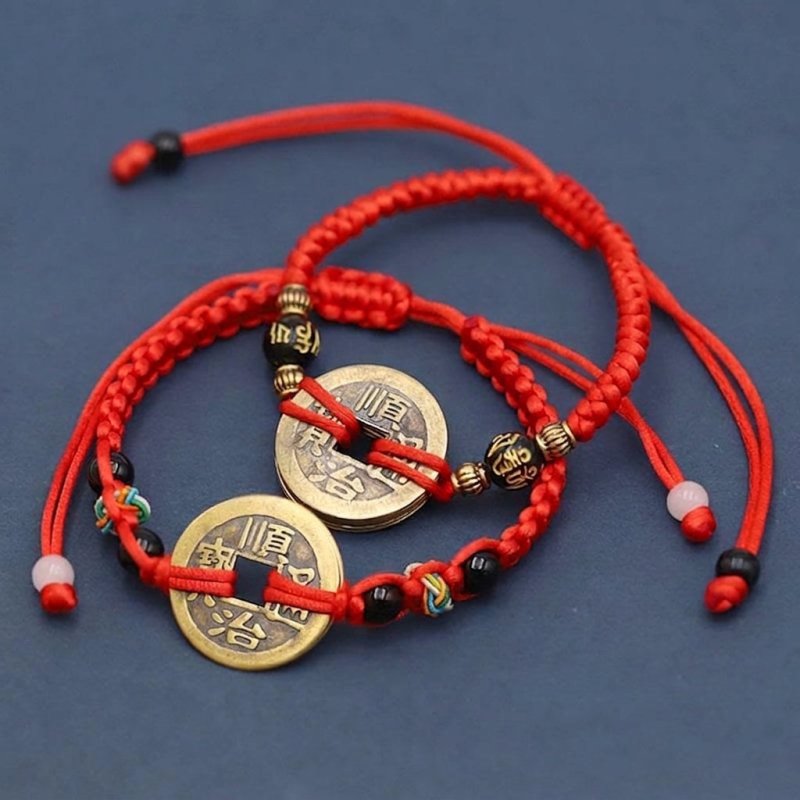
Five Emperor Coins Red Cord Bracelet — Handwoven Pure Copper for Wealth and Protection
The Healing Traditions Tied to a Tibetan Copper Bracelet
Tibetan sources describe the benefits of a tibetan copper bracelet along three dimensions: physical, mental, and spiritual. Each has its own evidence base, and each deserves to be discussed on its own terms rather than collapsed into a single claim.
Physical benefits. Copper has documented anti-inflammatory properties. In Ayurvedic practice, water stored in copper vessels is consumed in small daily amounts to support joint health; the same transdermal principle is what practitioners cite when wearing copper against the skin. A widely cited review at the University of Rochester Medical Center summarizes copper's role in haemoglobin formation, iron metabolism, and the maintenance of healthy connective tissue. A 2013 review in Comprehensive Reviews in Food Science and Food Safety traces the long human history of copper used for wellness. Many wearers of copper bracelets report a slight greenish tint on the skin after extended wear. This is a harmless reaction between copper and the natural acids in sweat, and practitioners often interpret it as a sign that transdermal absorption is occurring. The Medical News Today overview of copper and health summarizes what is and is not established in clinical literature.
Mental and emotional benefits. Wearers frequently describe a sense of grounding and a calming weight at the wrist. The explanation in the Tibetan framework is that copper's conductivity extends to prana (subtle energy), creating a continuous low-level activation that anchors attention. From a wellness perspective, the bracelet works as a tactile anchor — a physical object to reach for during moments of stress, similar to a worry bead or a meditation aid. The point is not the metal's mystical property. The point is the consistent, repeatable cue the piece offers.
Spiritual benefits. In the devotional framework, the bracelet is a wearable extension of mantra practice. A practitioner who wears an Om Mani Padme Hum engraving throughout the day is, by the tradition's own logic, generating the merit of repeated recitation through the ordinary movements of the wrist. The bracelet is also understood as a protective object, particularly when blessed by a monk. The Tibetan Buddhist canon includes extensive teaching on the protective function of mala beads, and the same principles carry over to engraved metal worn on the body.
The Relationship Between Copper Bracelets and DZI Beads
One combination appears often in authentic Tibetan work: copper strung or set with DZI beads. DZI (གཟི་, pronounced "zee") are etched agate beads with eye-like markings, prized in Himalayan cultures for protection and good fortune. According to Wikipedia's DZI bead entry, the earliest archaeologically controlled find of an agate bead with DZI-style decoration dates to a Saka culture excavation in Kazakhstan from the 7th to 5th century BCE, and similar agate beads were made in the Indus Valley during the Harappan period. The modern Tibetan tradition values DZI as a protective amulet; new and ancient DZI both appear in devotional jewelry.
When copper and DZI are paired in a single bracelet, the tradition reads them as complementary: copper conducts the energy of the wearer's intention, while the DZI bead is understood to deflect negative influences. The pairing is also a matter of craft — copper frames the harder agate without competing with its surface. For practitioners interested in the protective aspect of the bracelet, a copper-and-DZI combination is the most traditional expression of that intention.
Which Wrist to Wear It On
The question of which wrist a tibetan copper bracelet belongs on is one of the most common in this category. The traditional answer is the left wrist.
The reasoning is straightforward within the Tibetan framework. The left side of the body is considered the receptive side — the side that draws energy inward. Wearing the bracelet on the left wrist is understood to help absorb the protective, healing, and fortune-attracting qualities of the mantra engraved on the metal. The right wrist, by contrast, is the projective side, used for sending energy outward through action and intention.
For purely physical benefit, the choice of wrist matters less. Transdermal absorption of copper occurs from either side. Some practitioners alternate wrists by day to distribute contact, or wear a copper bracelet on each wrist when they want a complete circuit of reception and projection.
A practical note: remove the bracelet before showering, swimming, or washing dishes. Prolonged water exposure accelerates tarnishing and can degrade the cord or knotwork on braided pieces.
How to Care for Your Tibetan Copper Bracelet
Copper is a living surface. It darkens, develops a patina, and responds to the chemistry of the wearer's skin. This is part of the appeal, not a flaw.
For everyday care. Wipe the bracelet with a soft, dry cloth after wearing. This removes sweat and skin oils before they accelerate oxidation. Store the piece in a soft pouch or a separate compartment away from other metals, which can cause uneven tarnishing on contact.
For deeper cleaning. When tarnish builds, a paste of lemon juice and salt, rubbed gently with a soft cloth, restores copper's natural shine without harsh chemicals. Rinse with clean water and dry thoroughly afterward. Avoid commercial silver polishes; they are too abrasive for the soft copper surface and can damage hand-engraved mantras.
For energetic cleansing. Practitioners who treat the bracelet as a devotional object often cleanse it periodically with sage smoke, palo santo, or a brief rest under the full moon. Copper is not believed to accumulate energy in the way crystals are, so the cleansing is symbolic — a moment to reset the wearer's own relationship with the piece. The copper does not require this; the practitioner does.
A copper bracelet kept in this kind of basic care will last for decades. The patina it develops over years is part of the bracelet's biography, a record of every day it was worn.
How to Recognize an Authentic Piece
The market for "Tibetan-style" copper jewelry is full of pieces that look right but are not. The following checks help separate handcrafted work from mass production.
The magnet test. Pure copper is not magnetic. If a magnet sticks to the bracelet, the piece is copper-plated zinc, brass, or another base metal. It will not carry the conductivity or the skin contact the tradition describes.
The patina test. Real copper develops a natural patina over time — a slightly darker, sometimes greenish surface where the metal oxidizes from contact with air and skin. Copper-plated pieces do not develop patina. They chip, fade, or peel.
The weight test. Solid copper has a distinctive weight — substantial without feeling heavy. Pieces that feel too light for their size are almost certainly hollow or plated.
The price test. Authentic Tibetan craftsmanship is not free, but copper itself is not expensive. A genuine piece, hand-engraved with a mantra, runs from $35 to $80 depending on the work involved. Anything significantly below that range, marketed as "authentic Tibetan copper," should be examined carefully.
The source test. Reputable sellers name the workshop, the region, or the artisan community. They photograph the piece at angles that show the engraving and the finishing. They explain what the mantra means and where the metal comes from. Vague claims of "ancient craftsmanship" or "spiritually charged" are signals to look elsewhere.
What to Look for When Choosing Your Bracelet
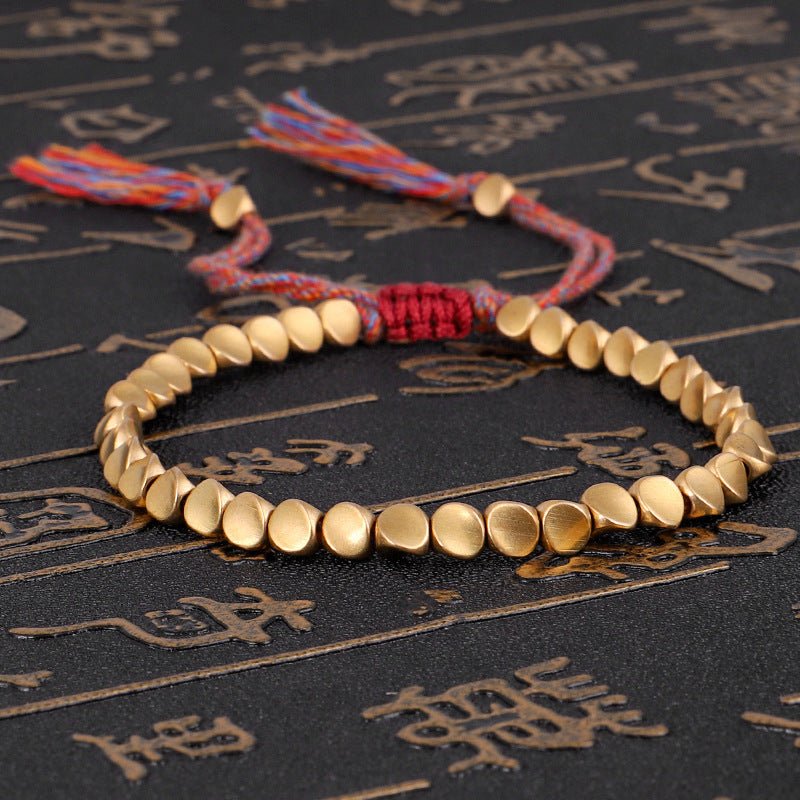
Copper Bead Bracelet — Tibetan Knot for Healing
A few practical questions help narrow the choice.
Mantra or plain. Engraved pieces carry the devotional weight of the Om Mani Padme Hum; plain copper cuffs are simpler and can be worn stacked. Most buyers who want the traditional significance choose an engraved piece.
Bead or cuff. Beaded copper bracelets — strung with copper nuggets, DZI beads, or a mix of metals — sit more lightly on the wrist and breathe well in warm weather. Solid cuffs feel more substantial and are easier to wear during seated practice.
With or without DZI. A copper bracelet paired with DZI beads carries the protective symbolism of both materials. A pure copper bracelet is closer to the simpler monastic style.
Adjustable or fixed size. Knotted cord and sliding closures are forgiving; they fit a range of wrist sizes. Fixed cuffs need a closer match to wrist circumference.
A Note on Wearing Copper Every Day
Yes, with one caveat. The slight green tint some wearers notice on the skin is not an allergic reaction. It is the harmless result of copper reacting with the acids in sweat. The tint washes off and the skin returns to normal within hours of removing the bracelet. As the skin adjusts to the metal over weeks of regular wear, the discoloration usually lessens.
A small number of people have a genuine copper sensitivity, and Wilson's disease — a rare genetic disorder of copper metabolism — is a contraindication for wearing copper against the skin. If either applies, consult a healthcare provider before daily wear. For everyone else, a tibetan copper bracelet worn every day is a normal and safe practice, and the most common experience is that the piece becomes an unremarkable part of daily life after the first week or two.
Closing
A copper bracelet from a Tibetan workshop is, at its core, a small piece of metalwork that carries a long tradition. The mantra engraved on the face was not chosen for marketing. The hand that hammered the metal was trained in a craft that goes back generations. The bracelet does not promise transformation or fortune. It offers a steady, wearable anchor — a weight at the wrist that turns with the day's movements and reminds the wearer, in a small but reliable way, of the intention set when the piece was first put on. For those drawn to the practice, that is the work the bracelet does, and it has been doing it well for a very long time.


